Photo courtesy Bandon Historical Society
The story of Tupper Rock, known as Grandmother Rock by the local Coos and Coquille tribes, is both a symbol of deep cultural significance and a stark reminder of the impacts of settlement in the Pacific Northwest. Once standing tall and revered near the mouth of the Coquille River, Grandmother Rock was a fixture on Oregon’s south coast—a place of stories, sacred traditions, and a natural landmark that linked the original inhabitants to their land. However, the rock’s fate became emblematic of a broader conflict between cultural preservation and industrialization, with the rock ultimately blasted apart to build a jetty and ease river navigation for new settlers.
The Sacred Heritage of Grandmother Rock
Before it's renaming and destruction, Grandmother Rock was part of a larger story known to the Coos and Coquille tribes. According to tribal narratives, Grandmother Rock was the physical embodiment of a family that had been transformed into stone due to a sacred transgression. As the story goes, a young girl, in the midst of a traditional puberty ceremony, broke cultural taboos by cooking sea anemone over a fire, causing it to whistle. In a show of shame and reverence for the cultural rules, her family—the girl, her grandparents, and her brother—were turned to stone near the river mouth. This transformative act created not just Grandmother Rock but a suite of stone figures, including other sea stacks and rock formations along the Bandon coast.
Known in various tribal languages as uumash or uumatl’ach, the rock was also a practical resource, being partially composed of blueschist. This extremely hard rock, formed under intense geological pressure, served as material for tools and watercraft components essential to the daily life of local tribes.
Tupper Rock: From Sacred Site to Quarry
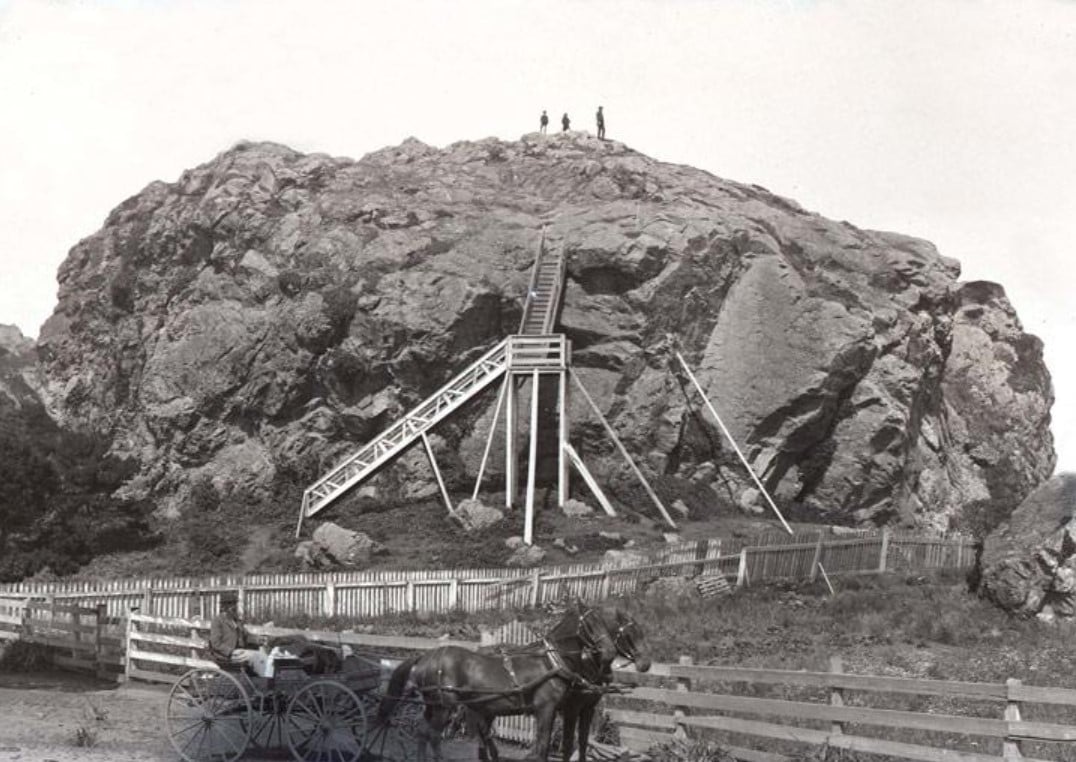
In the 1880s, as Bandon grew with new settlers, Grandmother Rock was renamed Tupper Rock after a nearby hotel owned by a former captain, Captain Tupper. Standing an estimated 60 feet tall, the rock attracted attention as a scenic fixture in the area, and a stairway was built leading to its summit. Photographs from the time show townsfolk climbing the stairway to enjoy Sunday concerts at a bandstand perched on top of the rock, a testament to the new settlers’ view of the rock as a place for community gatherings and tourism.
Despite its local popularity, the unique geological composition of Tupper Rock soon caught the eye of city founders for another purpose. By the 1890s, officials sought durable material to stabilize the erratic flow of the Coquille River and ease ship navigation at the river’s mouth. The natural state of the river was unpredictable, with the channel shifting during storms or tidal surges, sometimes emptying miles north or south of its previous mouth. The Coquille’s shifting sands and shoals posed a significant risk to vessels attempting to navigate to Bandon’s port. A jetty system seemed the best solution, and Tupper Rock provided the perfect material for construction.
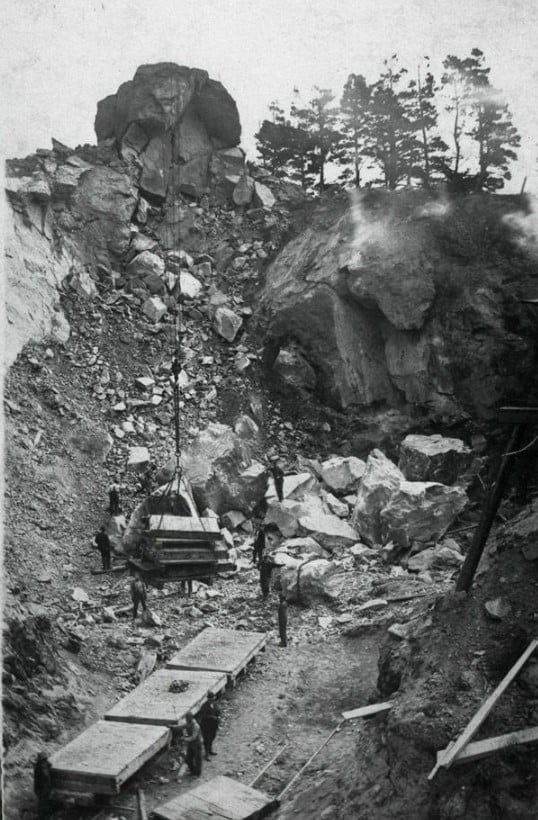
Photo courtesy Bandon Historical Society
The Coquille River Jetty and Lighthouse
The Coquille River jetty project began around 1893, using blasted sections of Tupper Rock to build the south jetty. Cedar branches bundled and submerged in the river mud created the initial framework, to which Tupper Rock's debris was added. By containing the river’s wandering course, the jetty made the channel more predictable and secure for navigation. Not long after, in 1896, the Coquille River Lighthouse was commissioned on the north side of the river mouth. Built atop another rocky obstacle known as Rackleff Rock, the lighthouse helped guide mariners through the treacherous waters, marking the channel with a reliable beacon until its decommissioning in 1939.
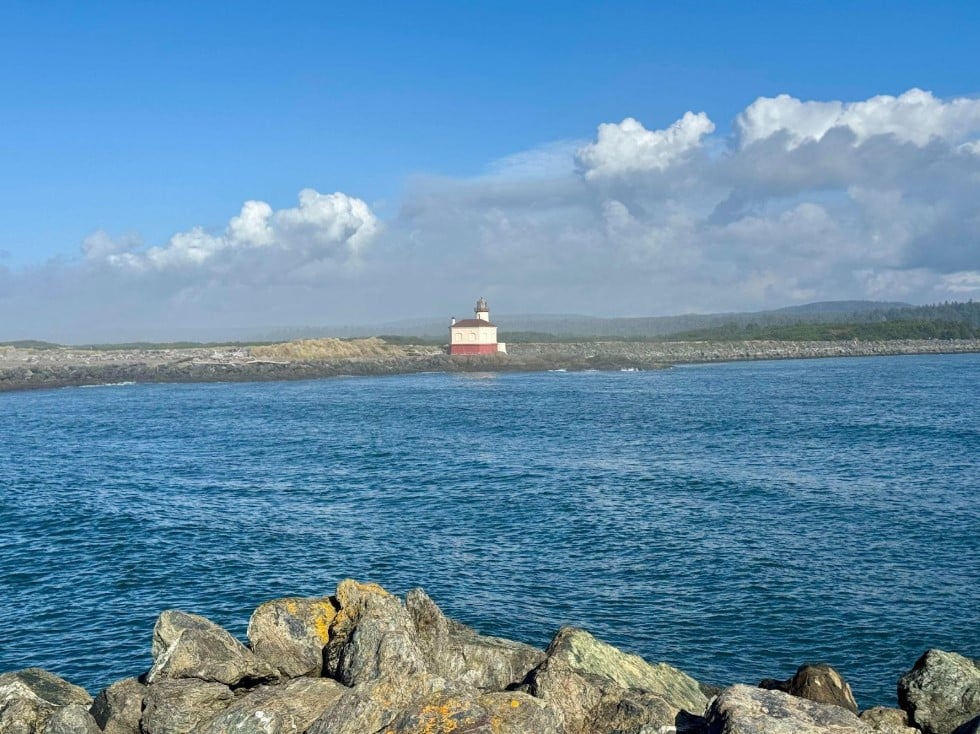
The south jetty, still visible today, is the most prominent physical reminder of Tupper Rock’s past, its scattered remains forming the structure that guides the river toward the sea. The Coquille River Lighthouse still stands as a popular historical site, now part of Bullards Beach State Park, created from lands once owned by pioneer families like the Bullards and the Hamblocks.
A Legacy of Loss and Transformation
Today, the original presence of Grandmother Rock lives on only in remnants of the quarry and in the stories of the local tribes who first revered it. Where it once stood, a quiet remains in its absence, and a retirement complex now occupies part of the area. Bandon’s history with Tupper Rock serves as a stark example of the profound changes that came with settlement—a story of how culture, geology, and industry intersected, leading to both progress and irreversible loss.
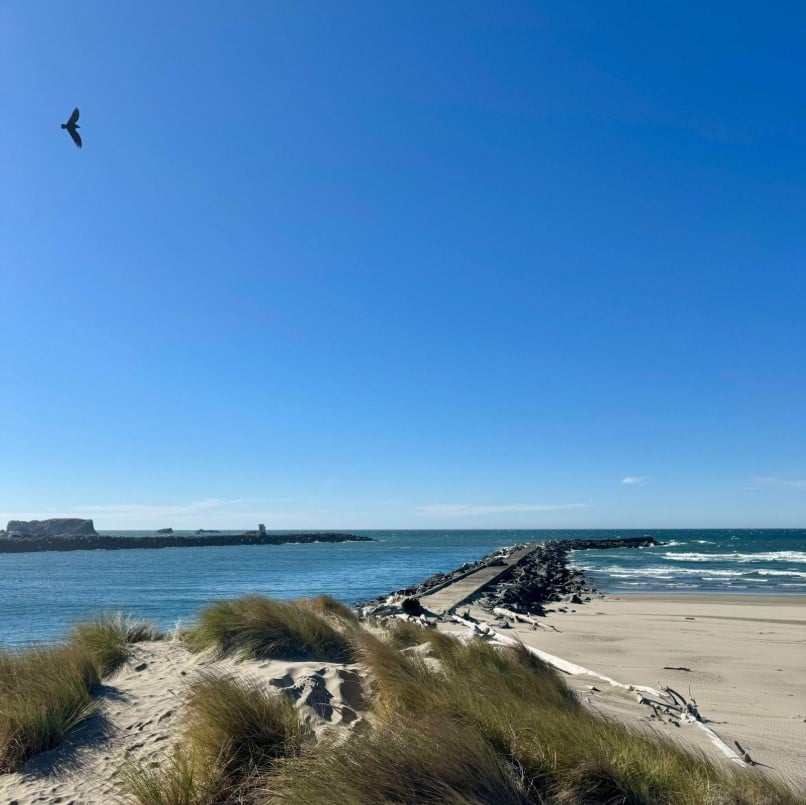
As we gaze out over the south jetty today, it is a reminder of the once-majestic Grandmother Rock, scattered in pieces to ensure the stability of the river’s flow, and in the process, erasing a piece of Oregon’s cultural and natural heritage.
Check out this article next